what three major initiatives did president hoover take to help the economy of the united states
Herbert Clark Hoover (1874 – 1964) was an American politician who served equally the 31st President of the U.s. from 1929 to 1933. Hoover, a successful man of affairs, get-go came to national prominence in the 1910s due to his work every bit a humanitarian. Amidst other things, he helped save millions from starvation during and afterwards the Commencement World War. Hoover then served equally the U.Due south. Secretary of Commerce from 1921 to 1928. He achieved unprecedented success in the mail service raising the stature of the Department of Commerce. Every bit President, Hoover's domestic policy achievements include unprecedented prison reform; concentration on kid health and protection; and the establishment of the Reconstruction Finance Corporation (RFC). In foreign affairs, his Proficient Neighbor policy improved U.Southward. relations with Latin American nations. Notwithstanding, despite his contributions, Hoover's presidency was dominated by the Bang-up Depression and he is more often than not remembered for his failure to answer to the crisis. Hither are the ten major accomplishments of Herbert Hoover as well as an excerpt on his response to the Great Low.
#1 Herbert Hoover was a world famous humanitarian
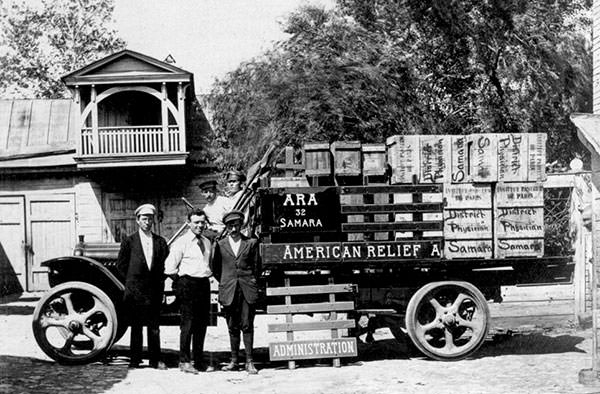
At the outbreak of Earth War I in August 1914, Herbert Hoover spearheaded an endeavour to ensure the safe return of 120,000 American tourists stranded in Europe. Germany's invasion of Belgium and so led Hoover to puddle his money, along with several wealthy friends, to organize the Committee for the Relief of Belgium. Headed past Hoover, the commission procured food for around 9 million Belgians who faced starvation. The efficiency of Hoover in accomplishing the task led to President Woodrow Wilson to engage him equally head of the U.S. Food Assistants, which diverted products overseas to American troops. His effectiveness in conserving resources and supplies needed for state of war made Hoover a household proper name in America. Later the Starting time World War, Hoover became head of the American Relief Administration (ARA). In this capacity, he channeled 34 million tons of American nutrient, wearable and supplies to war-torn Europe, aiding people in 20 nations. Herbert Hoover was earth renowned as a great humanitarian and he was nominated five times for the Nobel Peace Prize.
#two He achieved unprecedented success as U.S. Secretary of Commerce
Later winning the 1920 ballot, Republican President Warren Harding appointed Herbert Hoover as his Secretary of Commerce. Hoover retained this position under his successor, President Calvin Coolidge, thus serving from March 5, 1921 to August 21, 1928. Secretary of Commerce was a pocket-sized Cabinet mail. However, under Hoover's leadership, the Department of Commerce became as influential as the Departments of State and Treasury. Hoover encouraged enquiry into measures designed to annul harmful business concern cycles. He supported authorities regulation of new industries like aviation and radio. He brought together more than one hundred different industries and convinced them to adopt standardized tools, hardware, building materials and machine parts. Finally, he aggressively pursued international trade opportunities for American business. To accomplish these reforms, Hoover strengthened existing agencies or simply established new ones. He as well formed commissions that brought together authorities officials, experts and leaders of the relevant economic sectors to work together towards reform.
#three Herbert Hoover served every bit the 31st President of the U.s.a.
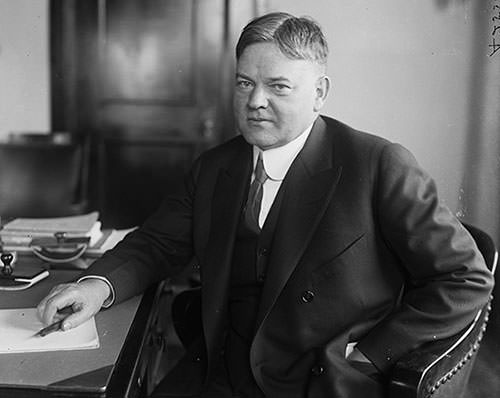
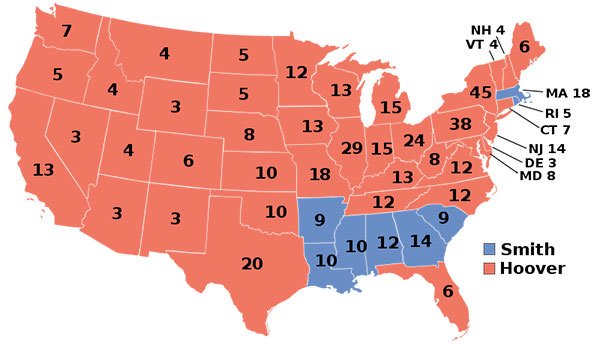
Subsequently the Great Mississippi Flood of 1927, the governors of six states along the Mississippi asked specifically for the help of Herbert Hoover. This led to President Coolidge appointing Hoover to coordinate the response to the flood. Hoover'south efficient leadership during the crisis made his reputation with the American people reach its acme. Thus when Calvin Coolidge decided to not seek reelection, Hoover became the leading candidate for the Republican presidential nomination. In the presidential election of 1928, Hoover defeated the Democratic nominee, Governor Al Smith of New York. He won the election with 58.two% percent popular vote and 444 balloter votes out of 531. Herbert Hoover served as the 31st President of the United States from March 4, 1929 to March 4, 1933. He sought re-election only was defeated by Franklin D. Roosevelt in the 1932 election.
#4 He brought kid wellness and protection on regime's agenda
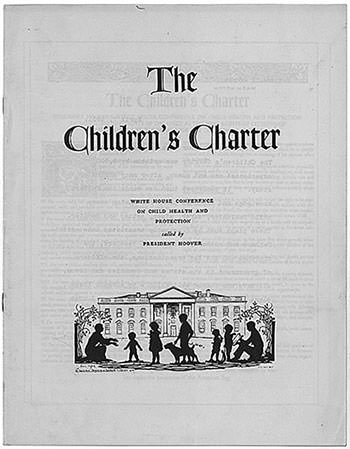
President Hoover increased the federal budget to include children's programs. In 1930, he hosted the showtime ever White House Conference on Child Health and Protection. The conference prepared technical findings and recommendations regarding every conceivable childhood concern from prenatal intendance and a safe environment during childhood to expanded educational opportunities and the promise of wellness intendance for the physically and mentally handicapped. To summarize the Conference's more important recommendations, a Children's Charter of Rights was prepared. The authorities was made responsible to obtain and protect those rights on behalf of the nation's children. These initiatives were taken forward by the Franklin Roosevelt administration, which took giant steps to fulfill the Children'southward Lease developed past Hoover'southward conference.
#5 He brought well-nigh unprecedented prison house reform
Herbert Hoover accomplished unprecedented prison reform. Viii bills regarding prison house reform were passed by Congress during his presidency. The Federal Bureau of Prisons was established in 1930. Among other things, it eliminated prison house overcrowding by establishing piece of work camps and edifice new penitentiaries and reformatories. A federal school for prison house guards was founded and all prison employees were moved under the supervision of the Civil Service Assistants. Educational and wellness benefits for prison house employees were improved and prison house employees became ameliorate trained through a special school. The number of prisoners on parole doubled during the presidency of Herbert Hoover.
#6 He fabricated a lasting contribution as a conservationist
Herbert Hoover was a conservationist. Every bit Secretarial assistant of Commerce, he was the driving strength backside such projects every bit the St. Lawrence Seaway and the Hoover Dam. He besides express oil pollution of coastal waters, protected salmon fisheries in Alaska and standardized lumber to eliminate waste material of forest resource. Equally president, Hoover'southward conservationist agenda included finding solutions to overgrazing; edifice dams; developing water resources; and consolidating national parks and forests. Most prominently, Herbert Hoover made a lasting contribution through the numerous national parks that he established as president. His assistants increased appropriations for national park operations from $two.2 1000000 in 1929 to $iii.seven million in 1932. During his presidency, three meg acres were added to the national park inventory.
#7 The influential Davis–Salary Act was passed during his presidency
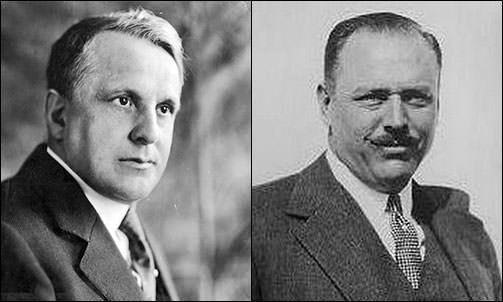
On March 3, 1931, President Hoover signed into police the Davis–Bacon Act. The Human action is named later its sponsors: Senator James J. Davis and Representative Robert L. Bacon. The Davis Bacon Act requires all on-site employees be paid fair wages, benefits and overtime weekly while working on regime-funded structure, alteration or repair projects at a minimum threshold of $ii,000. It has been updated several times. It continues to impact approximately xx percent of all structure projects in the The states and affects more than 25 percent of all structure workers in the nation at any given fourth dimension. The Norris–La Guardia Act, named later on its sponsors Senator George Westward. Norris and Representative Fiorello H. La Guardia, was also passed during Hoover's presidency. Information technology banned yellow-dog contracts, or agreements between an employer and an employee in which the employee, as a condition of employment, agrees not to exist a fellow member of a labor union.
#8 Herbert Hoover established the Reconstruction Finance Corporation
In December 1931, President Hoover proposed the establishment of the Reconstruction Finance Corporation (RFC) and, in Jan 1932, he signed the bill creating the RFC. The RFC was a regime agency which aimed to provide fiscal aid to railroads, financial institutions and business corporations. Its scope was later broadened to include assist to agriculture and financing for state and local public works. The RFC saved numerous businesses from failure. The agency also played a major role in recapitalizing banks in the 1930s and it was effective in reducing banking concern failures and stimulating bank lending. The RFC was adopted by Franklin D. Roosevelt and it was profoundly expanded during his presidency. It continued to run till 1957, when the United states government decided that information technology no longer needed to stimulate lending. In total, the RFC gave $2 billion in assistance to state and local governments and made a large number of loans, nearly all of which were repaid.
#9 His Practiced Neighbor policy improved U.S. relations with Latin American nations
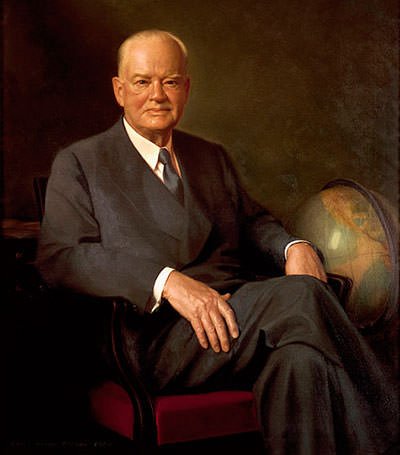
President Hoover's most important success in foreign policy was his move towards non-interventionism in Latin America. Though associated with President Franklin D. Roosevelt, this " Adept Neighbor " policy actually originated with the Hoover administration. Later his election in 1928, Hoover embarked on a ten-calendar week tour of Latin America during which he gave speeches which stressed on his plans to reduce American political and military machine interference in Latin American affairs. He backed his words with concrete action. He removed American troops from Nicaragua in 1932. He signed a treaty with Haiti the same year, promising to stop the American occupation by January one, 1935. He also personally arbitrated a dispute between Chile, Republic of peru, and Bolivia. Hoover's "Adept Neighbour" policy towards Latin America build a solid foundation for his successor.
#10 He was partly responsible for the creation of UNICEF
Afterwards the Second Globe War, President Harry Due south. Truman selected Herbert Hoover to make a rapid survey of world food supplies and needs. Hoover visited 38 countries in 76 days and, when the survey was finished, he urged the food producing countries to increment their food exports to famine‐stricken countries. On the initiative of Hoover, a school meals program in the American and British occupation zones of Frg was begun on April 14, 1947. The plan served iii,500,000 children aged between half-dozen and 18. In full, around 40,000 tons of food was provided to the children. In his final report, Hoover recommended and laid the program for the formation of an organization inside the Un to focus attending on the needs of children. This led to the creation of the United Nations Childrens Fund (UNICEF) on December 11, 1947. Hoover, also secured UNICEF'S get-go contribution of $15 million from the United States.

Herbert Hoover and the Great Depression
The defining episode of the presidency of Herbert Hoover was the Wall Street Crash of 1929 and the ensuing Swell Low. Hoover pursued a multifariousness of policies in an attempt to lift the economy. Amidst other things, he implemented protectionist trade policies and raised U.S. tariffs on over 20,000 imported goods. However, America'southward trading partners retaliated by raising their tariffs. All this led to reduction of American exports and imports by more than one-half. The policy thus backfired and worsened the Depression. Although some of his measures like the establishment of the RFC provided some relief, Herbert Hoover largely failed in treatment the Great Depression. The economy kept falling and the unemployment rate rose to 25%. This ultimately led to his landslide defeat in the presidential ballot against Franklin D. Roosevelt.
Source: https://learnodo-newtonic.com/herbert-hoover-accomplishments

Post a Comment for "what three major initiatives did president hoover take to help the economy of the united states"